Within South Africa we courier your artwork to your door - the shipping cost will show at the checkout.
When shipping art internationally, two primary options are commonly considered: crated and rolled. Crating involves securely packaging the artwork in a custom-built crate, providing maximum protection against physical damage but often resulting in higher shipping costs due to size and weight. On the other hand, rolling art involves taking stretched paintings off the frame, carefully wrapping the artwork and placing it in a protective tube. This method is more cost-effective and suitable for flexible pieces. Choosing between crating and rolling depends on the specific artwork's size, fragility, and budget, as well as the destination's shipping requirements and regulations.
We will be in touch regarding the best options for you.
Virtual hanging of art is an innovative service we offer that allows art enthusiasts and collectors to visualize how artworks will appear in their desired spaces before making a purchase. We digitally place the selected artworks on your walls, in the correct scale to achieve the desired aesthetic. This service not only helps in making informed decisions but also enhances the overall art-buying experience, providing a realistic preview of the final result and ensuring that the chosen artworks harmonize with the surrounding decor. Please contact us to make use of this service!
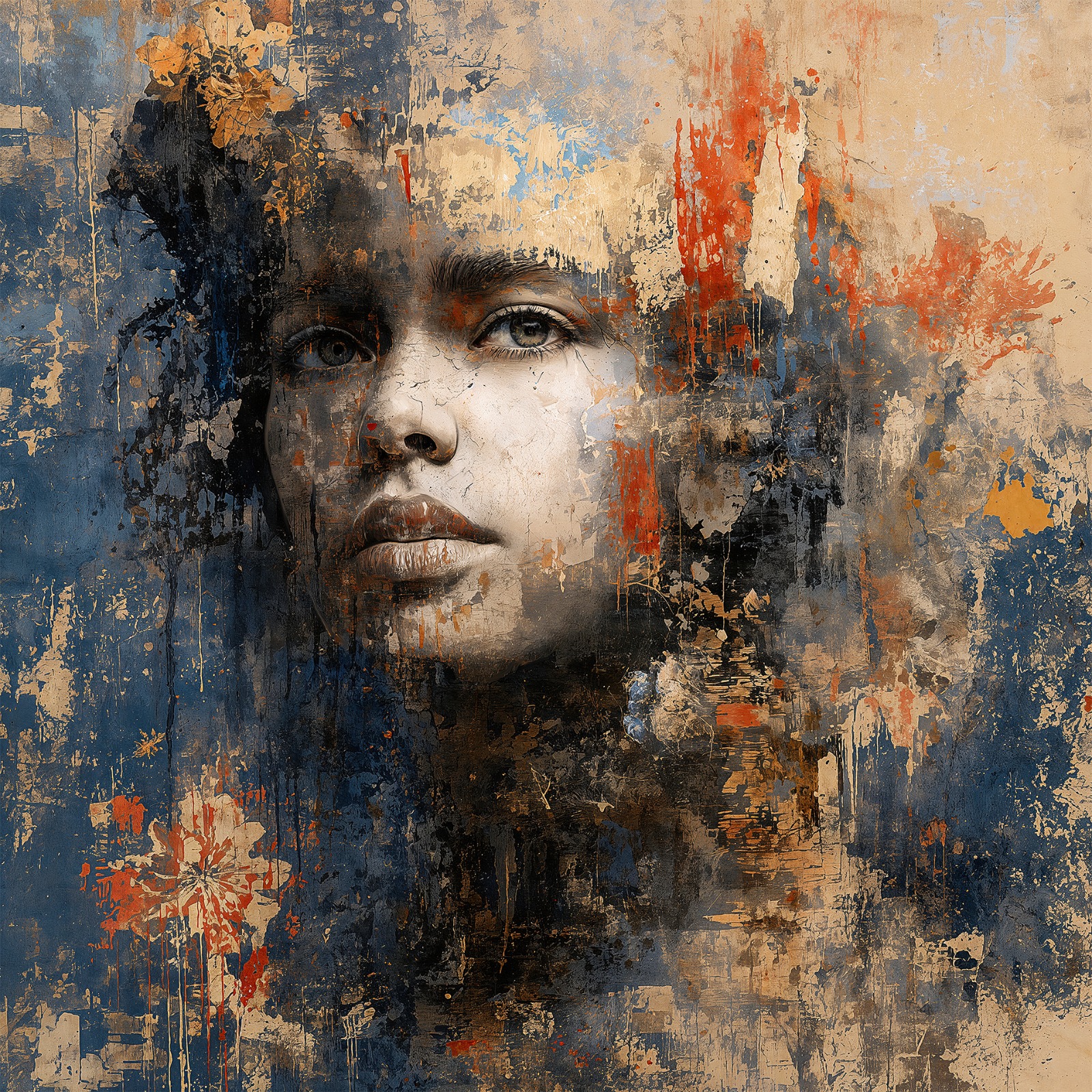
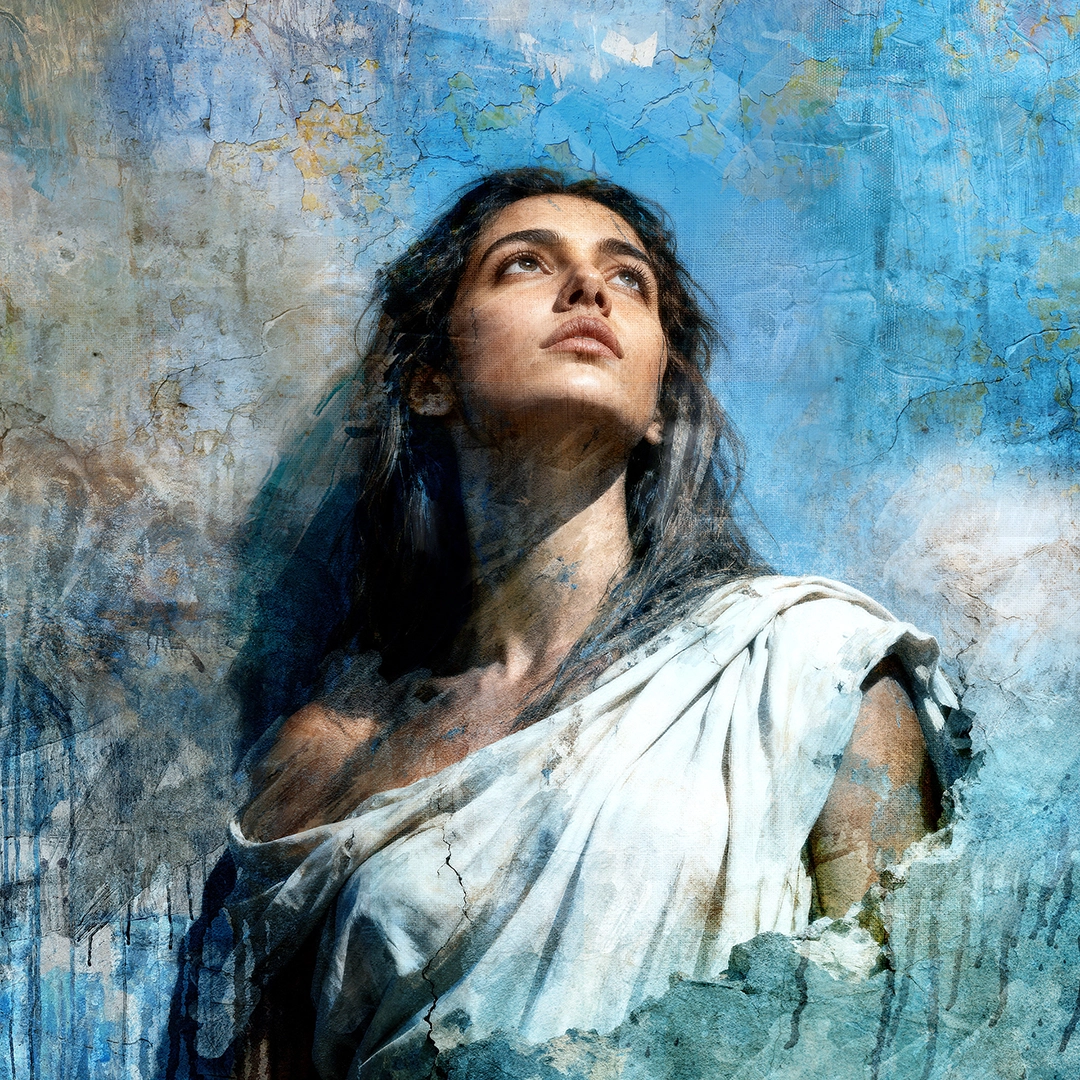
Freya draws on the symbolic richness of the Norse/Germanic goddess of love, fertility, and beauty, reimagining her presence through a contemporary, textural digital language. Rather than depicting Freya in a literal or mythological form, the work seeks to evoke her essence through surface, colour, and fragmentation.
The layered textures that envelop the figure suggest both growth and erosion — a duality central to Freya’s domain. Love and fertility are not static forces; they are generative, cyclical, and often turbulent. The distressed surfaces, cracks, and painterly abrasions echo this sense of continual transformation, where creation and decay exist simultaneously. The figure appears to emerge from and dissolve into these textures, symbolising the inseparability of the human body from the natural and mythic forces it embodies.
Colour plays a key symbolic role in the work. Deep blues and muted greys evoke the northern landscapes of Norse mythology — cold, expansive, and elemental — while the bursts of warm reds and ochres introduce a visceral counterpoint. These warmer tones suggest passion, vitality, and the life-giving aspects of fertility, but also hint at the intensity and unpredictability of love itself. The interplay between cool and warm colours creates a visual tension that mirrors Freya’s complex nature as both a nurturing and powerful figure.
Floral-like forms and organic motifs embedded within the composition allude subtly to fertility and growth, while their fragmented and weathered appearance suggests the passage of time and the persistence of myth across generations. The face remains a point of calm and focus, anchoring the composition amidst the surrounding abstraction.
Ultimately, Freya is an exploration of how myth can be translated into material and emotional experience — where texture becomes memory, and colour becomes feeling.
Brand
Stephen Symons
Stephen Symons
Stephen Symons was born in 1966 in Cape Town, South Africa, where he currently lives and works. Alongside his visual art practice, he runs a graphic design studio and works as a historian and author. He holds a PhD in History from the University of Pretoria, a Master’s degree in Creative Writing from the University of Cape Town, and a National Higher Diploma in Graphic Design from the Cape Peninsula University of Technology. He has had two solo exhibitions, titled Nutria, related to his PhD research at the Castle of the Cape of Good Hope (2017), and at the University of Pretoria (2018), and is an awardwinning author of poetry and short fiction.
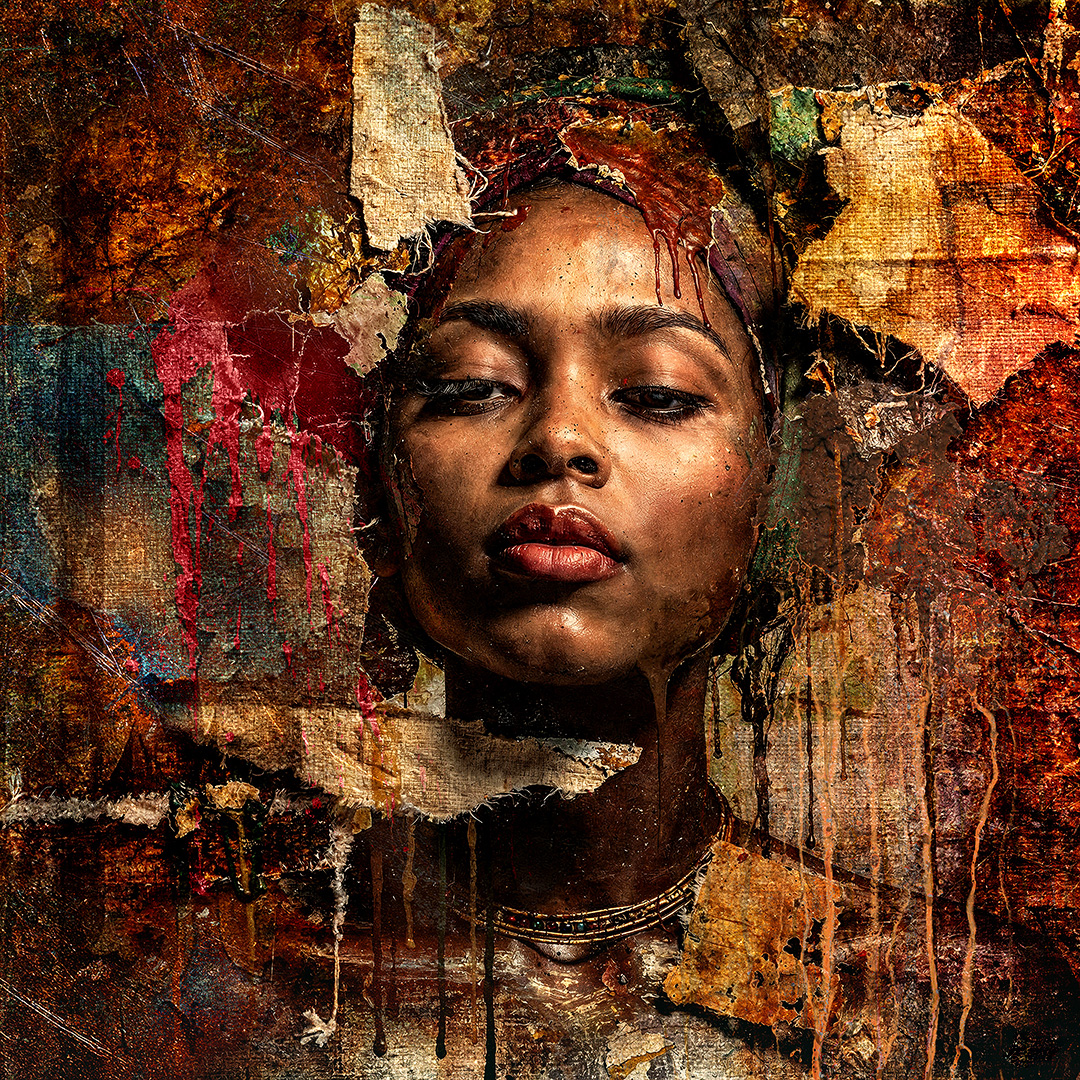
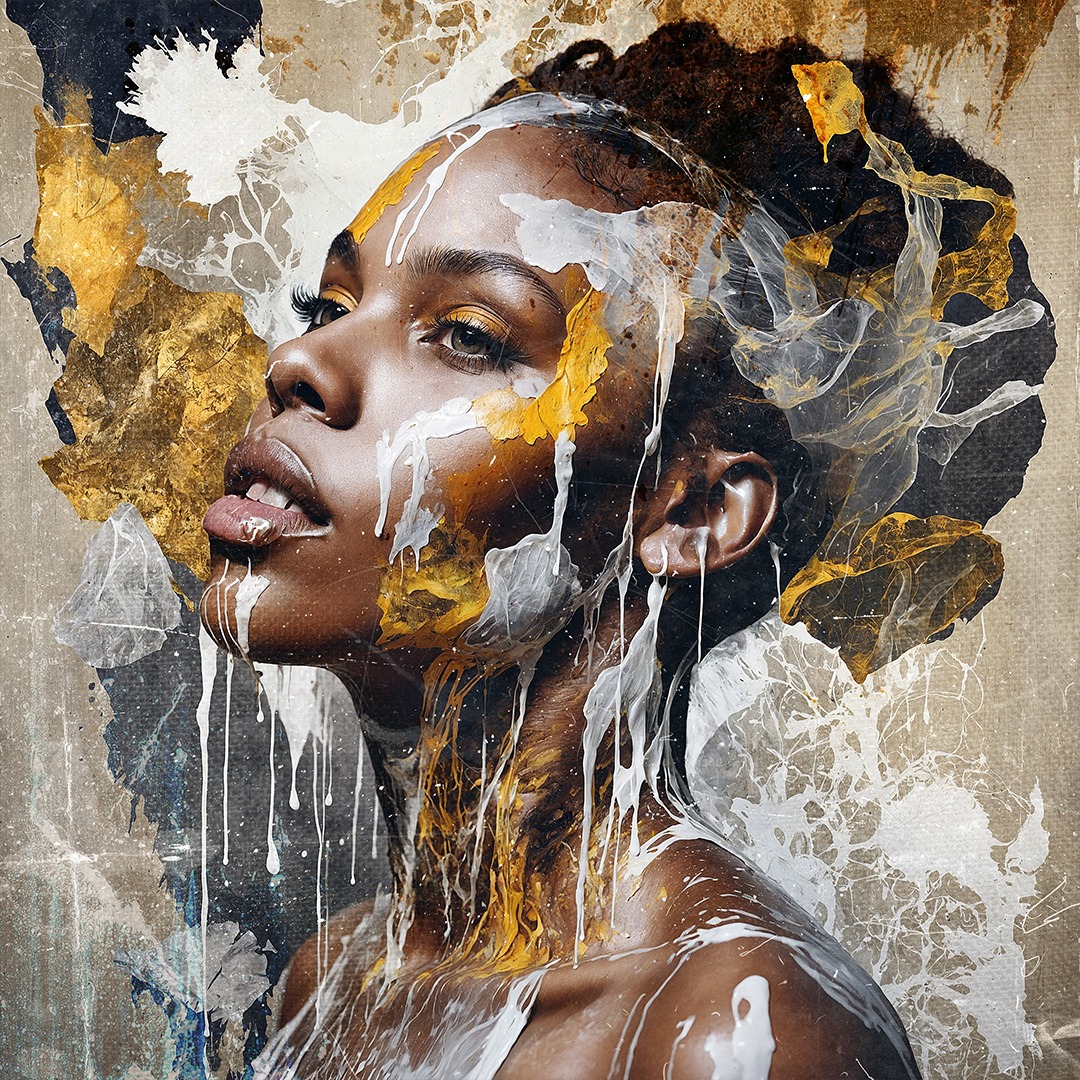
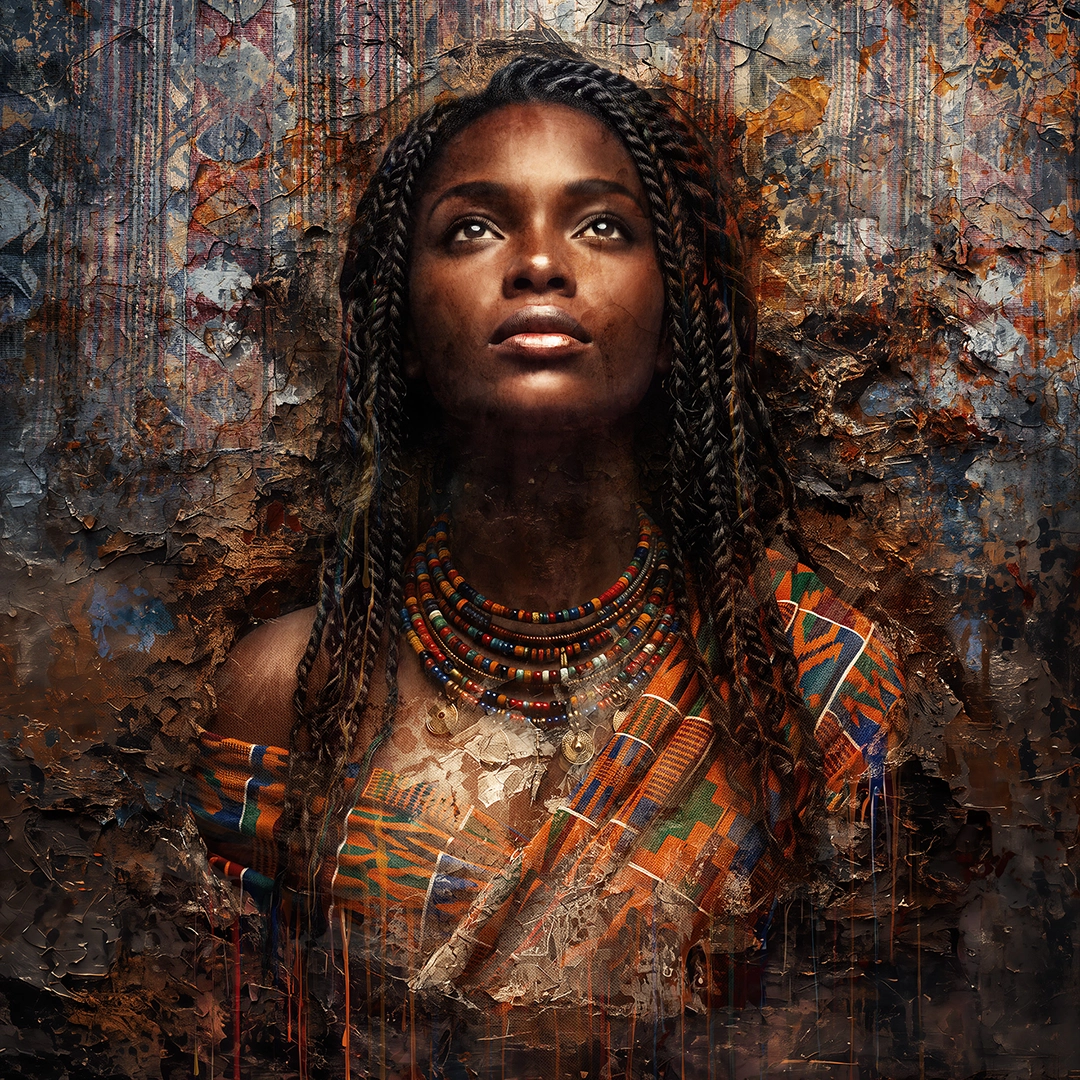
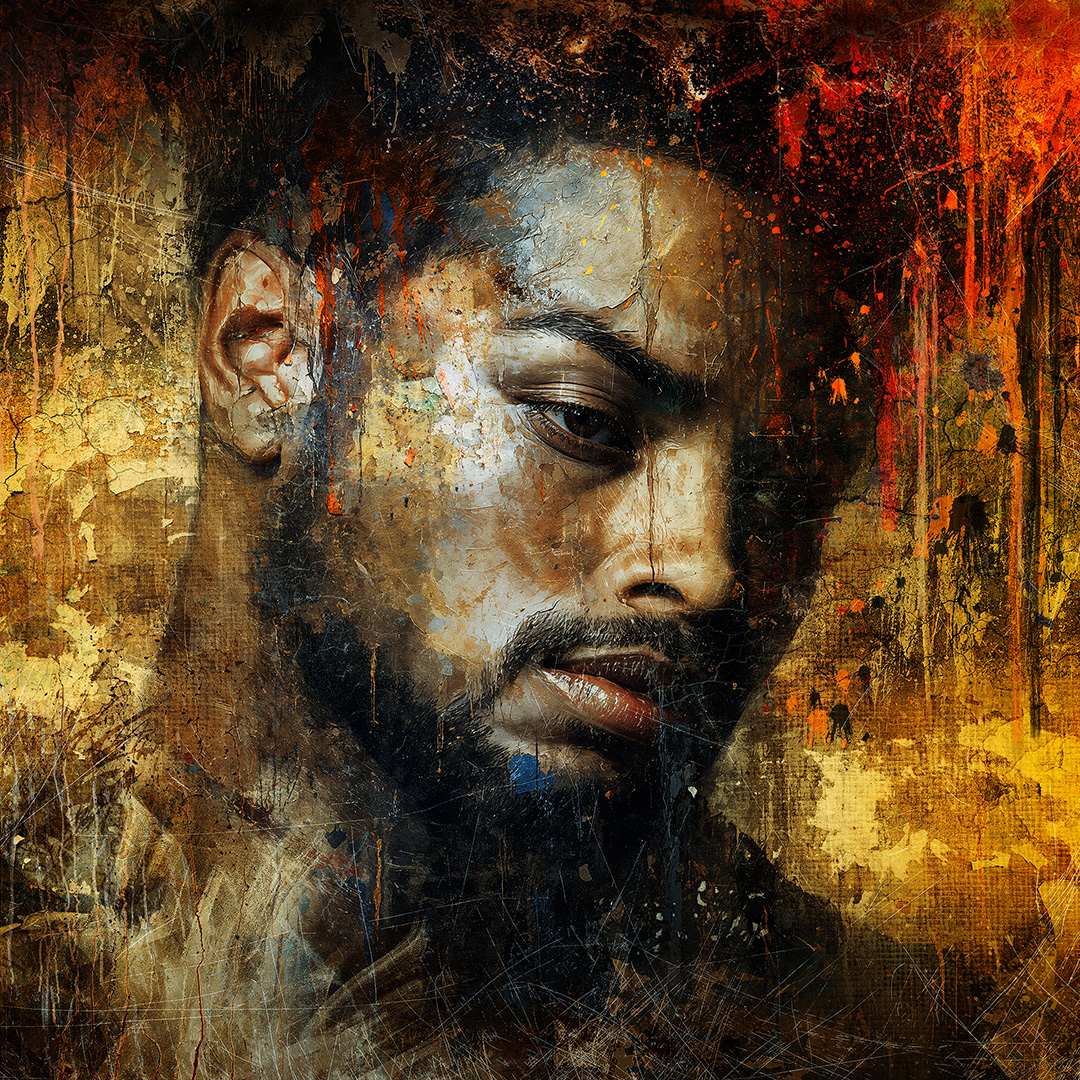
Symons’s artistic practice engages the tradition of portraiture as a layered and contested archive rather than a fixed representation of identity. His works challenge the notion of the portrait as a complete and permanent record, instead presenting the face as something constructed through processes of accumulation, erasure, and revision.
Working entirely in a digital medium, Symons creates images that echo the visual language of classical painting and illustration. His compositions often draw on the structure and balance of Old Master portraiture, while his painterly surfaces are built through a highly tactile digital process using a pressure-sensitive tablet. Drips, textures, and gestures are rendered with precision, resulting in works that carry the depth and immediacy of physical paint. It is not uncommon for a single image to consist of over 100 layers, each contributing to a complex interplay of colour, texture, and visual depth.
The richly textured surfaces of his works function as visual palimpsests, built up and reworked to reveal traces of earlier stages. This process reflects his interest in the way history is continually rewritten, with the past remaining present through fragments and residues. By referencing classical portrait conventions while simultaneously disrupting them, Symons questions ideas of visibility, memory, and who is remembered.
Through fragmentation and material tension, his work reflects the complexity of identity and historical truth, inviting the viewer to consider the portrait not as a fixed image, but as an evolving record shaped over time.
Stephen Symons is in South Africa exclusively represented by The Artists Gallery in Cape Town and will show 2026 for the first time internationally with The Travelling Art Gallery.