

Description
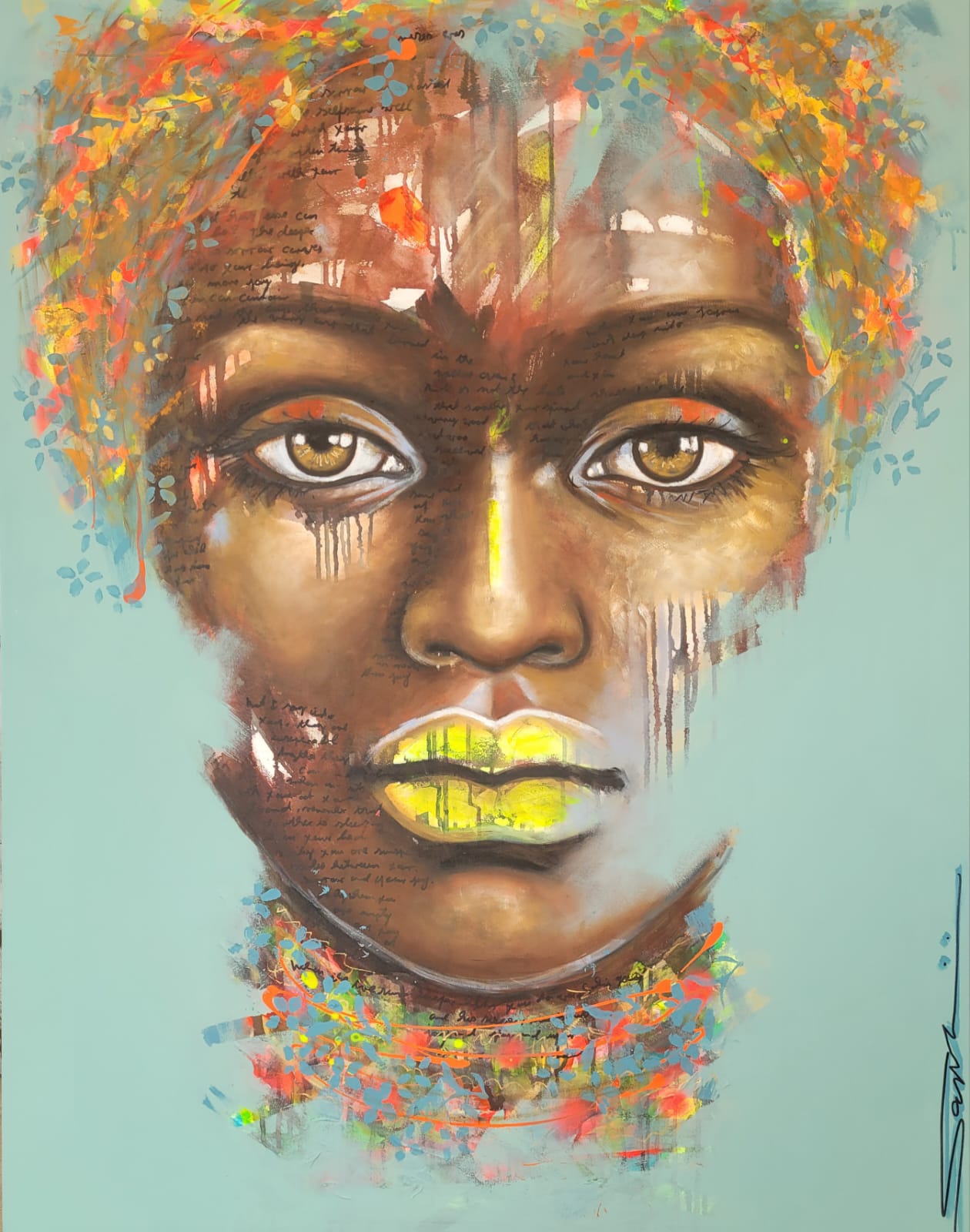
The painting “Sorrow and Joy” tells a story about life itself—beautiful in its many details, yet always intertwined with loss and farewell. The work was inspired by my recent visit to the Eastern Cape, where I attended a celebration of life for my late father-in-law.
During this gathering, a powerful story was shared: the story of two people who had loved each other for more than five decades and who now had to say, “until we meet again.” It was also a farewell to a friend, mentor, and teacher who had touched and inspired many lives. Despite the sadness, the event was filled with laughter, dancing, singing, and colour. In African culture, the passing of life is embraced as a natural and inevitable part of the cycle of life, and this spirit was deeply present.
The women cooking, singing, and praying—dressed in vibrant garments and colourful headscarves—left a strong visual and emotional impression on me. This inspired the composition of the painting: deep, contemplative eyes gazing into the infinite, surrounded by rich colour and patterned clothing that reflects both life and celebration.
The painting also incorporates a poem by Khalil Gibran about sorrow and joy, which is written directly into the work and reinforces its central theme.
Your joy is your sorrow unmasked.
And the selfsame well from which your laughter rises was oftentimes filled with your tears.
And how else can it be?
The deeper that sorrow carves into your being, the more joy you can contain.
Is not the cup that holds your wine the very cup that was burned in the potter’s oven?
And is not the lute that soothes your spirit, the very wood that was hollowed with knives?
When you are joyous, look deep into your heart and you shall find it is only that which has given you sorrow that is giving you joy.
When you are sorrowful look again in your heart, and you shall see that in truth you are weeping for that which has been your delight.
Some of you say, “Joy is greater than sorrow,” and others say, “Nay, sorrow is the greater.”
But I say unto you, they are inseparable.
Together they come, and when one sits alone with you at your board, remember that the other is asleep upon your bed.
Verily you are suspended like scales between your sorrow and your joy.
Only when you are empty are you at standstill and balanced.
When the treasure-keeper lifts you to weigh his gold and his silver, needs must your joy or your sorrow rise or fall.