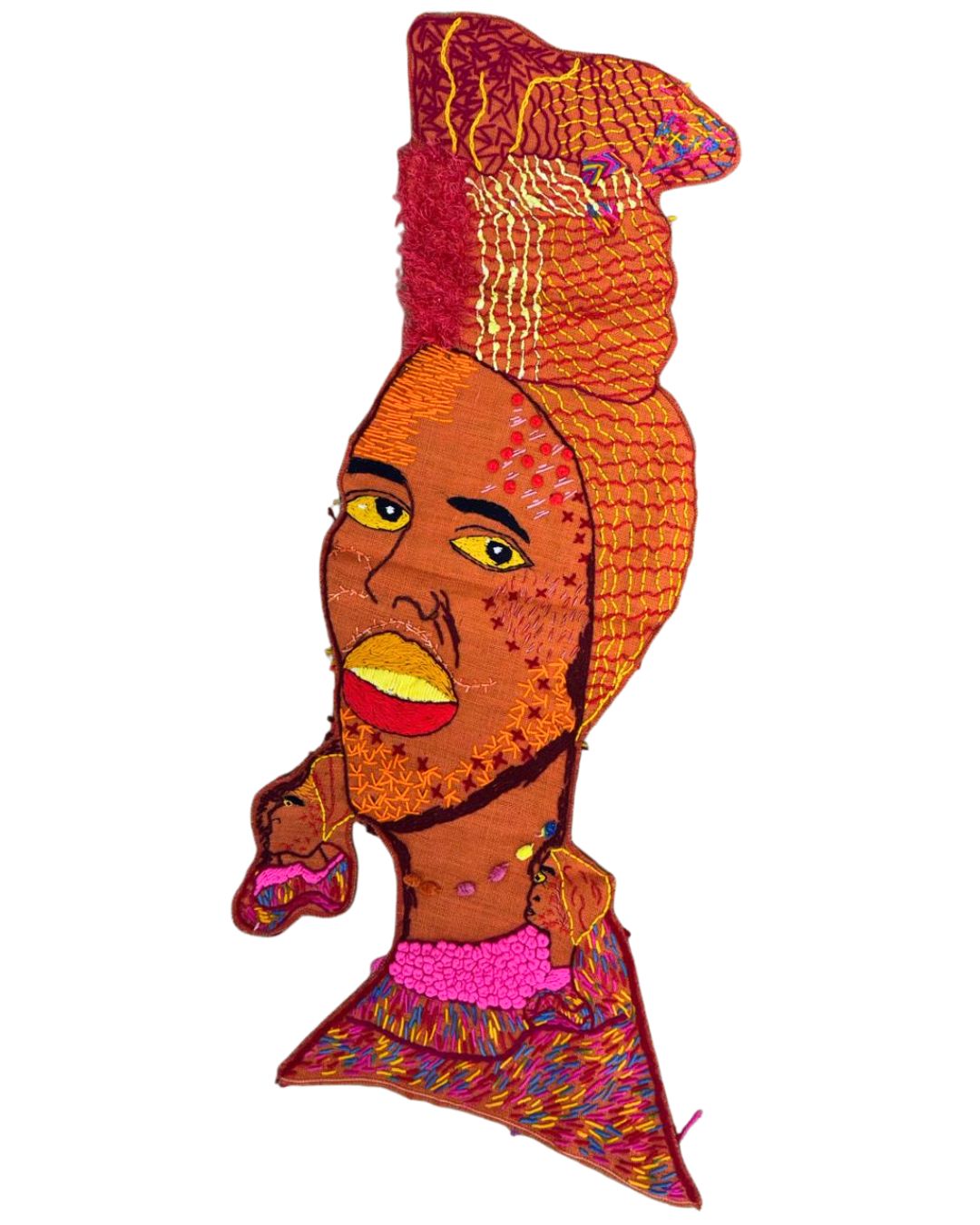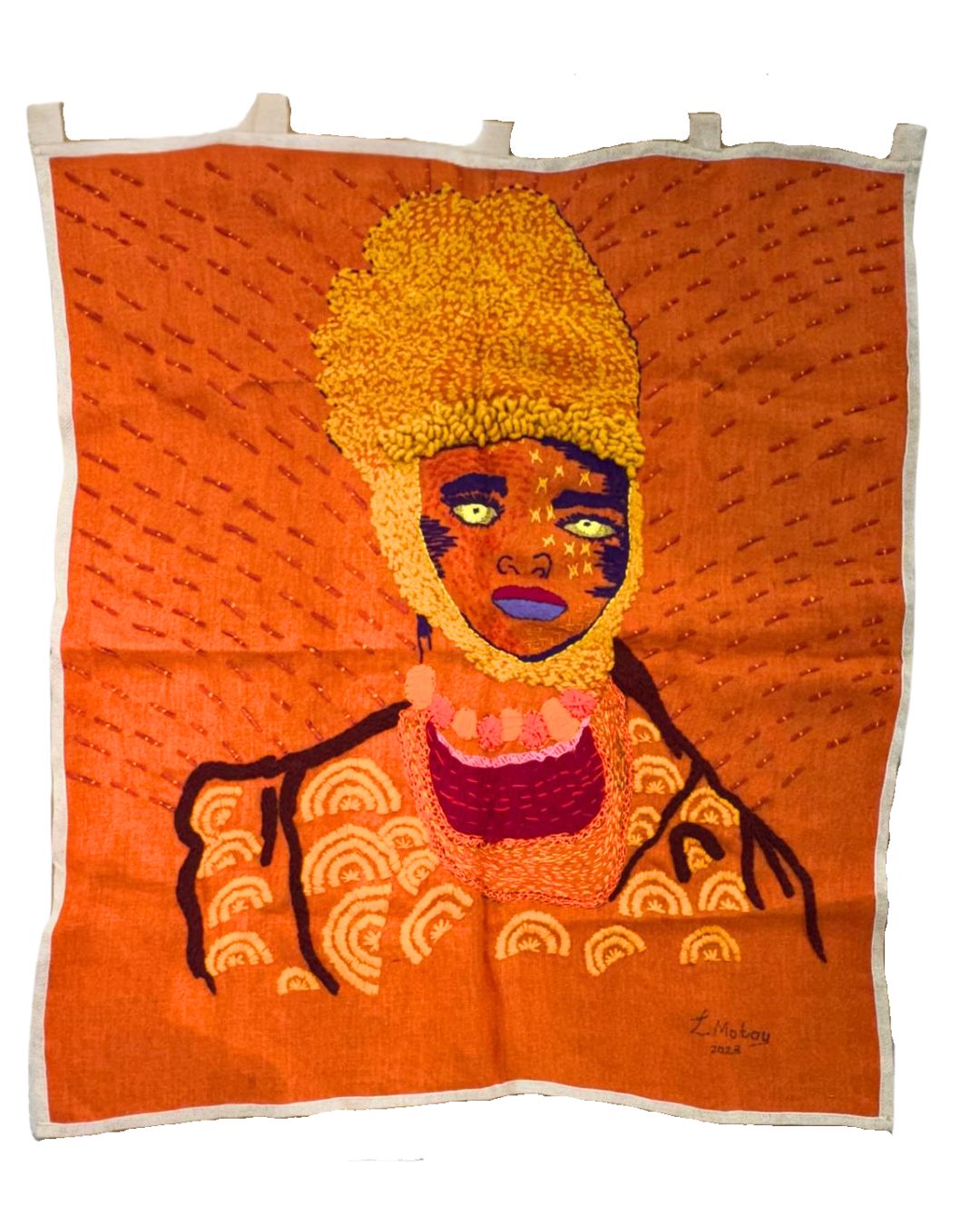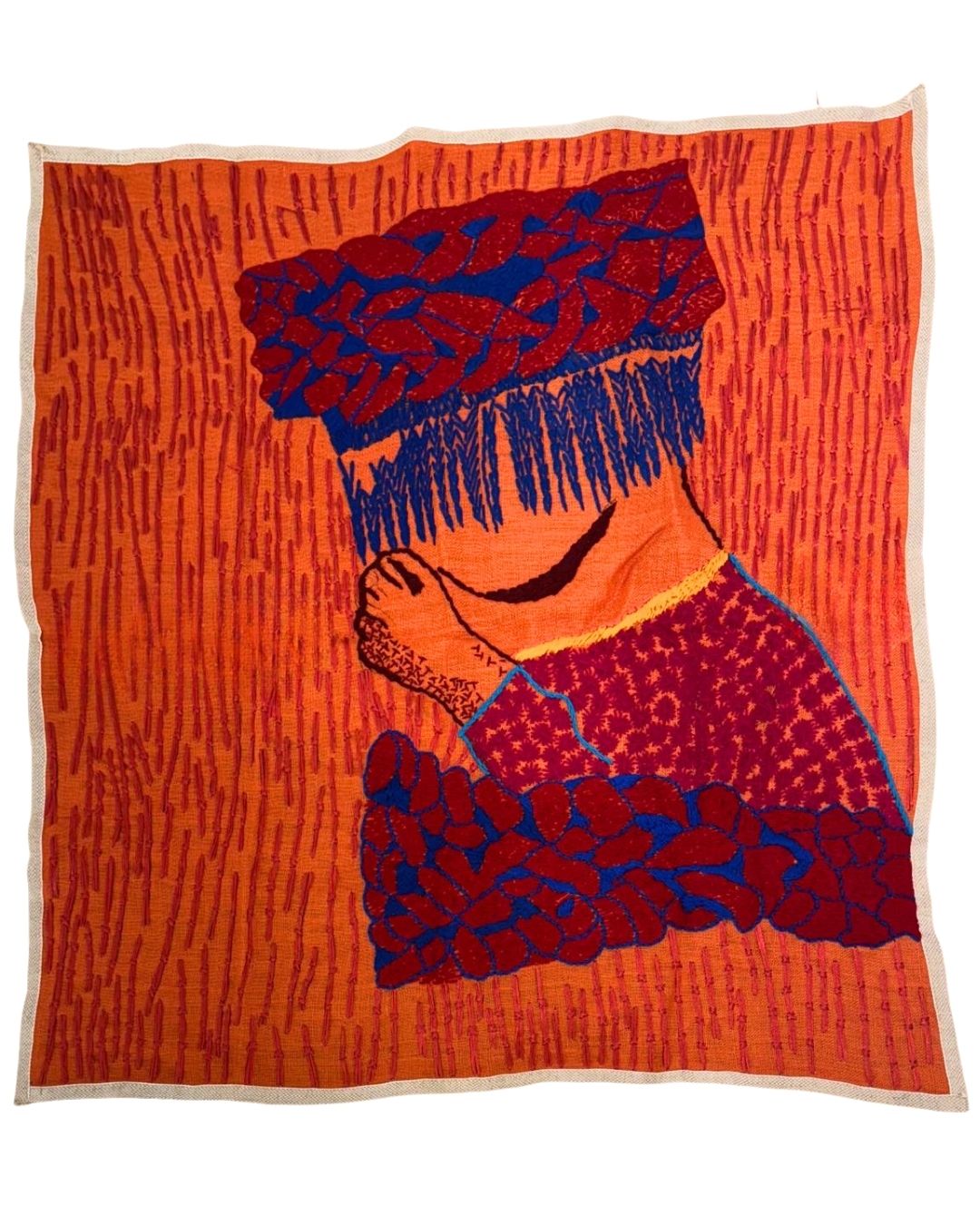

 | Lerato MotauSouth African textile artist Lerato Motau creates her work amidst the lived realities of motherhood, between cooking, cleaning, and raising her children. Rather than emerging from a formal studio environment, her pieces are born in her home on Vilakazi Street, the only street in the world once home to two Nobel Peace Prize Laureates, Nelson Mandela and Archbishop Desmond Tutu. This context is not incidental: it forms part of the narrative stitched into her work, connecting personal, domestic life to larger histories of leadership, struggle, and community.Each stitch in Motau’s textiles functions like a word, collectively forming narratives about her life and the lives of the women she depicts. These are intimate stories of individual womanhood, yet they simultaneously speak to broader cultural and traditional identities. In her hands, thread becomes language, fibre becomes memory, and the domestic space becomes a site of artistic authorship and cultural preservation. Her artworks share a unified aesthetic while diverging through variations in colour, stitch, and texture. Motau works primarily with threads and fibres that have been passed down to her—materials gifted by friends over many years. These inherited and donated materials carry communal histories, embedding her pieces not only with personal memory but with the lives and connections of the women around her. Each artwork thus becomes both singular and collective, weaving together the shared experiences, labour, and resilience of women. Grounded in place, history, and everyday life, Motau’s work transforms the ordinary into the profound. Through needle and thread, she elevates domestic labour into artistic expression, honouring the stories that are often left unspoken yet are foundational to community, culture, and identity. |
Showing all 3 resultsSorted by latest